135compact.com 35mm ultra compact cameras Olympus AF 1 Mini
The
Olympus AF1 Mini (Infinity Mini in the US) was released in 1995, a
fully
automatic 35mm film camera. It
inherited many features from the 1991 Mju I. It's small and
lightweight. There is not much technical information about it. As there
were several models with similar names, things often get mixed up. The camera is water-protected as the later Mju II. Its main features are:
35mm F3.5 lens, 3 elements in 3 groups, autofocus with focus lock, min. focus 0,5m Electronic shutter, 1/45-1/360s (?), flash ready and focus o.k. indication in the viewer window Size 118x63x44, Weight 185 gr. without battery 50-3200 ISO, automatic DX coding, self-timer, automatic film advance and (re-)spooling, water-protected
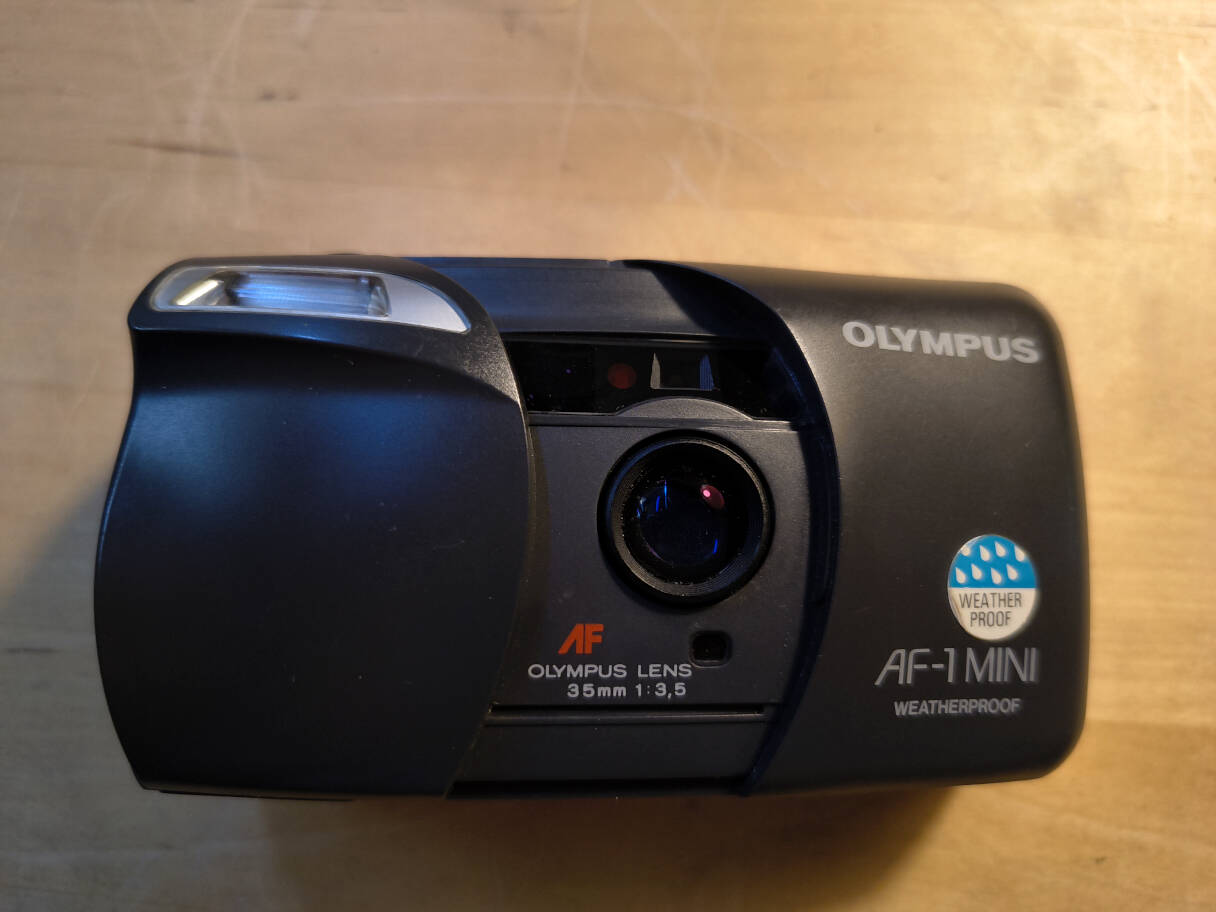
Cover closed
Back
side. Film indication window.
Battery compartment on the edge to the left, takes one CR123 or 2 AA
batteries. The battery cover is one of the weak points of the camera.
On most of those for sale it is broken, hence the glue from taping the
cover shut.
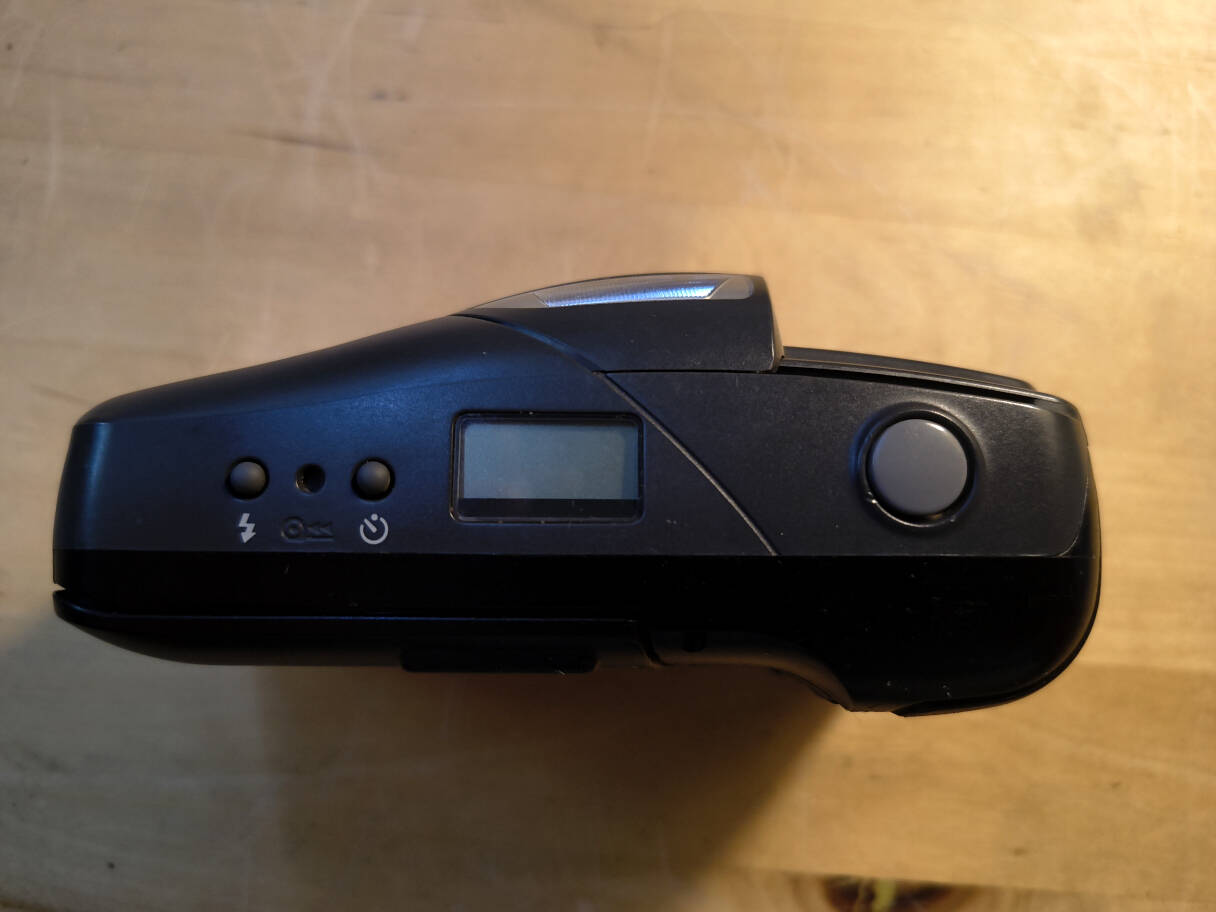
Seen from above. Flash mode button, rewind button,
self-timer button, small LCD screen, shutter button.
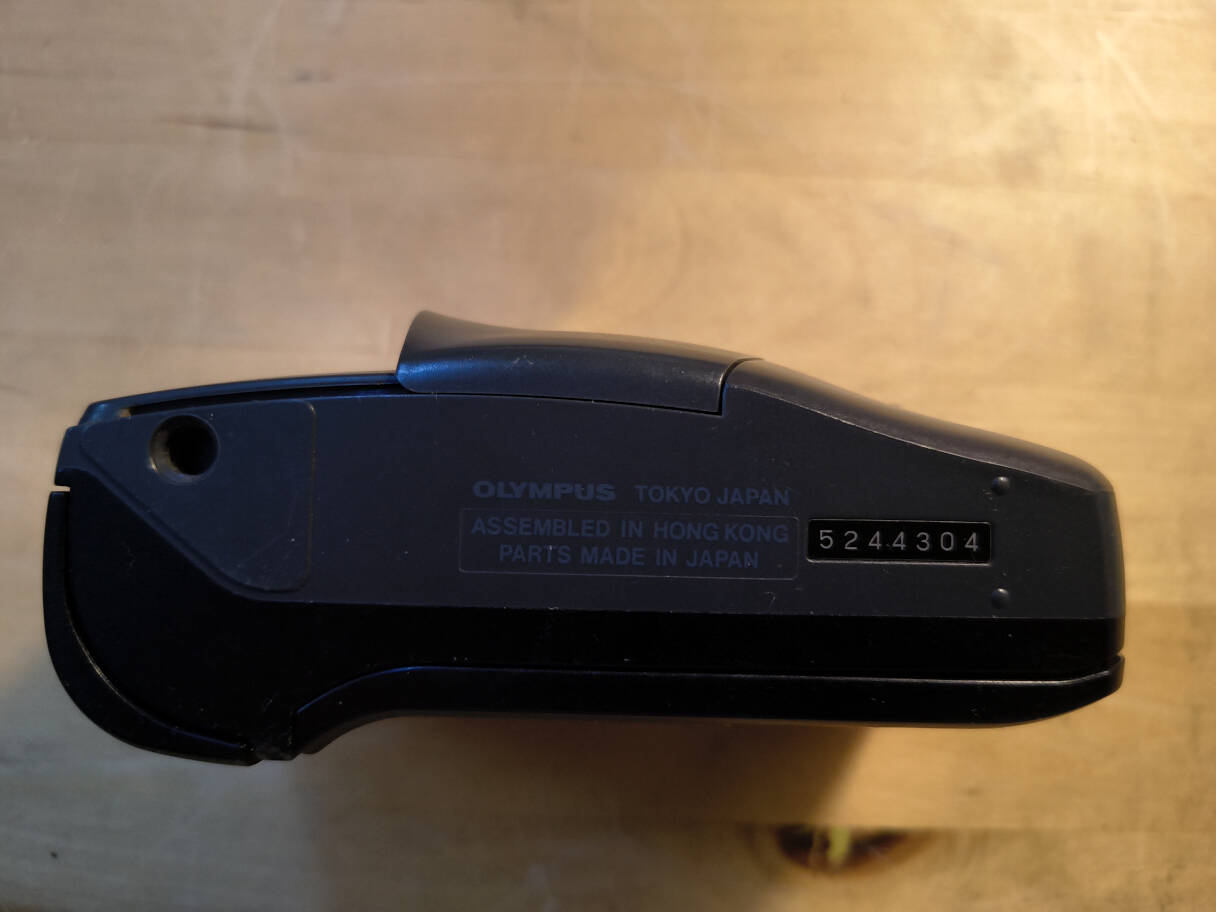
Seen from below. Tripod socket.
Cover open. The
flash is built into the sliding cover. Obviously a bad idea, as there
are many cameras without working flash. It went back into the housing
on later models.
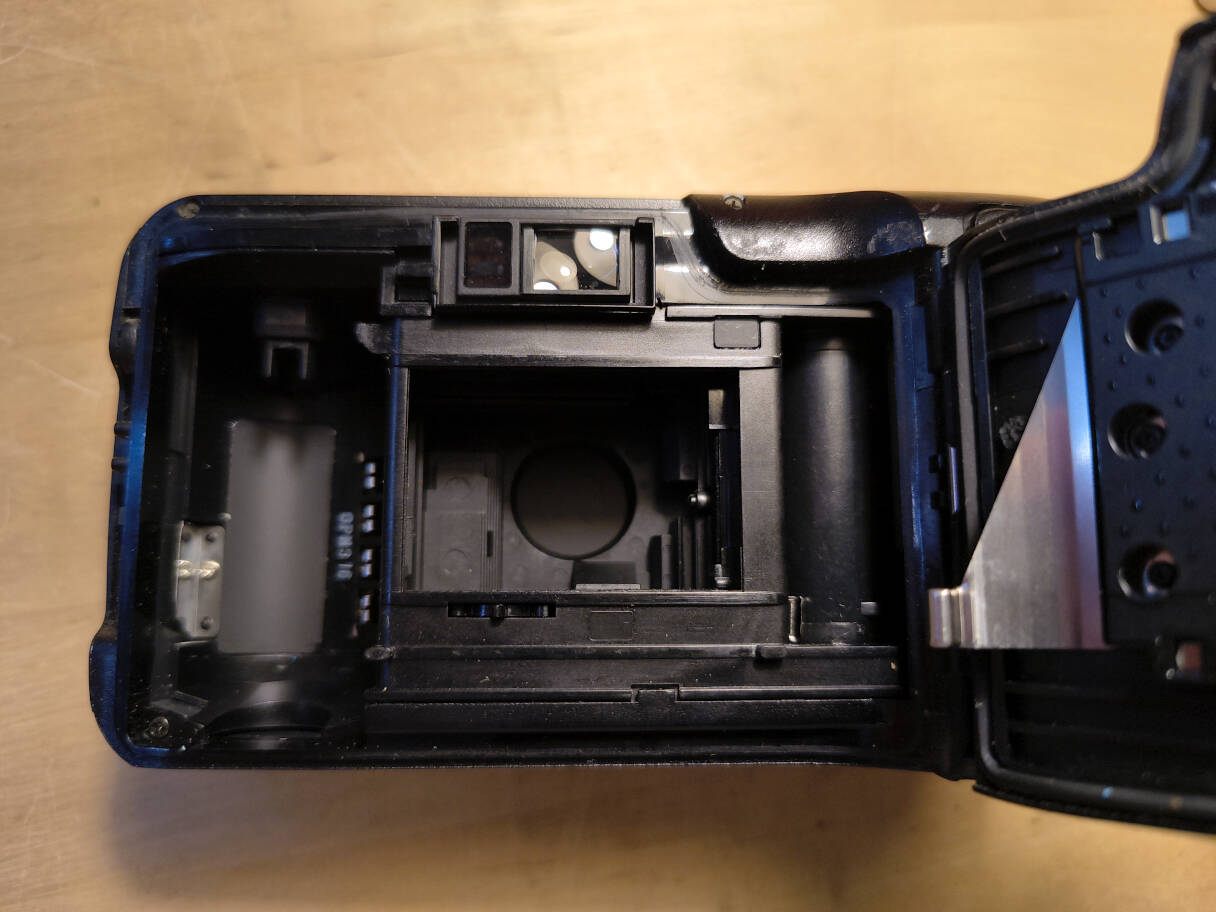
Camera film compartment open.
Battery Compartment with a CR123 battery.
Battery Compartment with 2 AA batteries. This
camera is easy to use.
Autofocus is responsive and works well. Putting a film is easy as
well, open the back, drop the
film, tear the film leader across the film plane and that's it. The
camera spools the film automatically. As with most point and shoot
ultra compacts, auto
flash is set at start.
The
AF1 Mini is a good point and shoot camera. Sharp images, good
autofocus,
in a tiny little camera. Used models tend to be expensive. Seen the
problems with the battery compartment and the flash you better look for
an older Mju I oder the much better (and even more expensive) Mju II.