The
Lomo LC Wide isn't one of the cheap plastic cameras, it even cannot be found
for low prices, but it's similar to the LC-A model shown here. It's easy to handle and doesn't let you know the settings
it chose. It makes part of the
Lomography family and its style of photographing.
You can use it as a half frame camera. There are very few cameras which
can do both formats. Seen today's film prices, it's a nice option. So it's also presented in this section. Its main features are:
17mm F4.5 Minitar-1 lens, 2-zone focus, min. focus 0,40m Automatic electronic shutter, +120sec(!!).-1/500, Aperture F 4.5-16. Battery o.k. and exposure warning LED in viewfinder Size 108x68x44,5, Weight 220 gr. 100-1600 ISO, double exposure possibility 3 film formats: 24x36, 24x24, 18x24
If you want the full information about the camera, it's here.
For the half frame format you have to prepare the camera before putting the film:
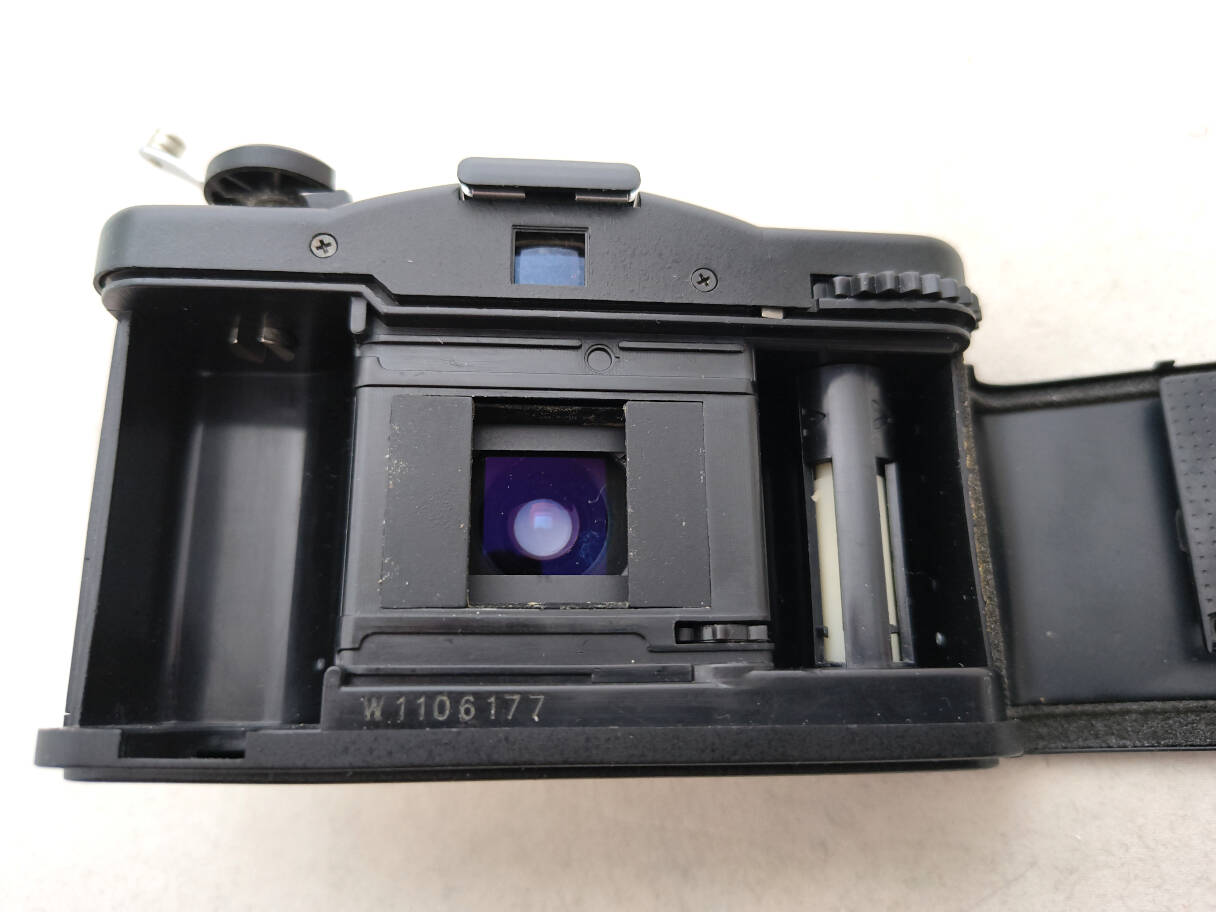
You have to insert the film mask into the film plane and set the advance to half frame at the bottom of the camera.
The cover has an intermediate setting. The viewer shows less than you will have on the photo.
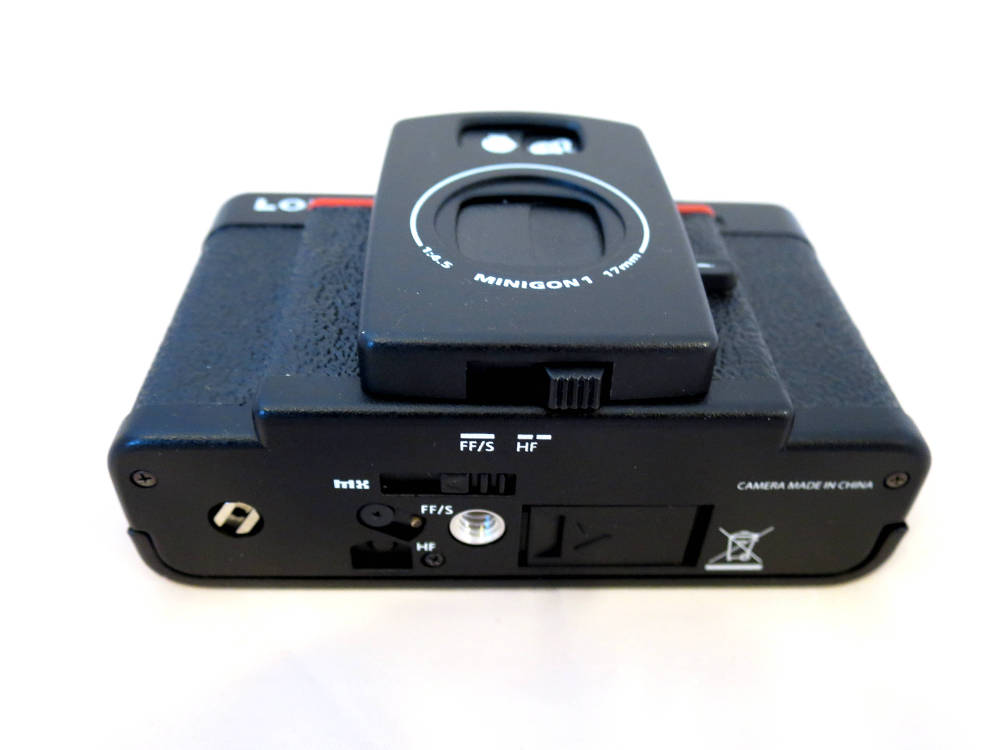
Seen
from below. It takes 3 LR/SR44 batteries, still available. Motor wind coupling (the motor wind was never released.), rewind unlock button, film advance selector (full/half), double exposure release, tripod socket, battery compartment. Under the lens: cover sliding lever with intermediate setting for 18x24.
As the
18x24 format has its own film advance, you can squeeze more than 75
photos on a 36 exp. film and it has its own viewing mask to help framing. I use it a
lot for street photography. Even as half frame the 17mm lens is still
quite wide, the standard focal length for half format being 25mm. Film
advance gives a bit of an uneven spacing, so try to advance quickly and
with one move. Except very bright weather, use at least 400 ISO film to
avoid shake and blur (unless you are into Lomography style).